Why cabinet paint fails, and where it starts
A kitchen cabinet is the dirtiest surface in the house. Years of cooking leave a thin film of grease on every door and drawer front, worst around the handles and above the stove. Paint cannot grip that film. It sits on top for a few months, then chips at the edges where hands and dish towels rub it.
Factory finishes add a second problem: they are slick on purpose. A satin or gloss topcoat has to be dulled with sanding before anything will bond to it, even a good primer. Skip that step and the new paint peels off in sheets the first time someone scrubs a spill.
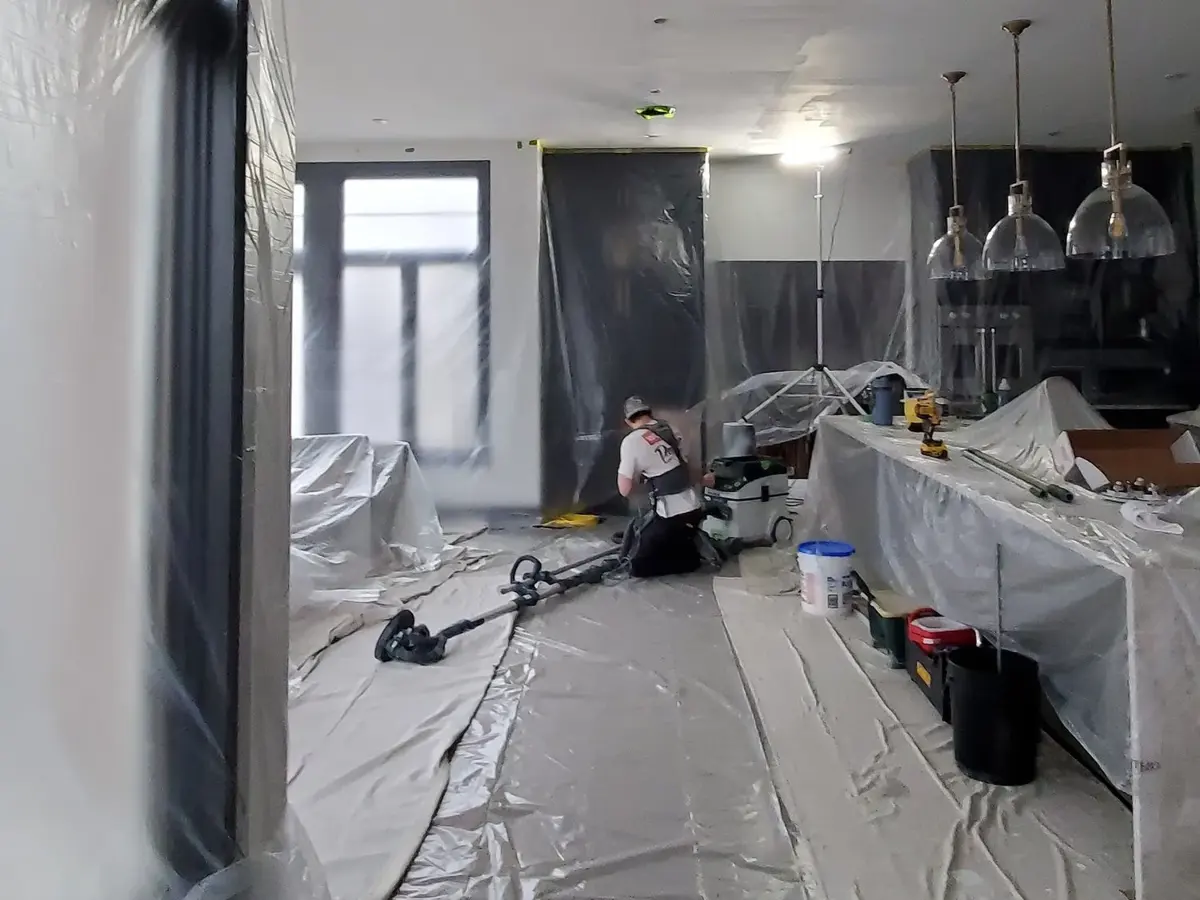
That is why the first day of a cabinet job looks nothing like painting. It is degreasing, rinsing, sanding and wiping, over and over, until a clean rag comes away clean.
Doors off, every piece labelled, primer before colour
Doors and drawer fronts come off their hinges and get a number, written somewhere that will not show, so every piece goes back where it came from. Hinges and pulls get bagged by cabinet. Painting a door while it hangs invites runs and a hard line at the hinge, so the flat pieces go on a rack and the frames get masked and painted in place.
Bare wood and old finishes both want a bonding primer, then a light sand between coats to knock down dust nibs. New, unfinished cabinets need the same primer for a different reason: it seals the grain so the colour goes on even.
Finish method is a real choice. A sprayer lays down an even coat fast and leaves very little texture, while a brush and fine roller give a harder-working film if the paint is allowed to level. Either one can look excellent in the right hands, and Rob will tell you plainly which he recommends for your kitchen and why.
Cure time is not dry time
Cabinet paint feels dry to the touch in hours, but it keeps hardening for days, and full hardness can take a few weeks depending on the product and the room. Stacking plates against fresh doors, or hanging a wet towel on a new drawer front, leaves marks that sand-and-recoat has to fix. Go easy on the first couple of weeks and the finish rewards you for years.
If you are in the Twin Cities and weighing paint against a full replacement, call Rob Fast at (612) 445-4023. His approach is brutally honest: if your doors are too swollen or damaged to paint well, he will say so before any tape goes down.