Paint shows every flaw underneath it
A fresh coat of paint does not hide a wall. It highlights it. Dents from door handles, nail pops, cracked corners, old anchor holes and scarred trim all catch the light and show through, especially with a satin or eggshell finish.
That is why Hues Painting lists surface touch-ups prior to paint (drywall, wood, etc.) as its own service. Rob Fast picked up a "do it right even if it's painful" mentality early on, and prep is where that mentality gets tested, because it is the slowest part of the job and the part nobody sees afterward.
Patching drywall and wood the right way
Nail pops get reset or pulled and the hole filled. Small dents and dings get a thin coat of joint compound, and larger damage gets a patch and a feathered edge so the repair does not read as a bump. Wood trim gets wood filler, left to cure fully, then sanded flush with the grain.
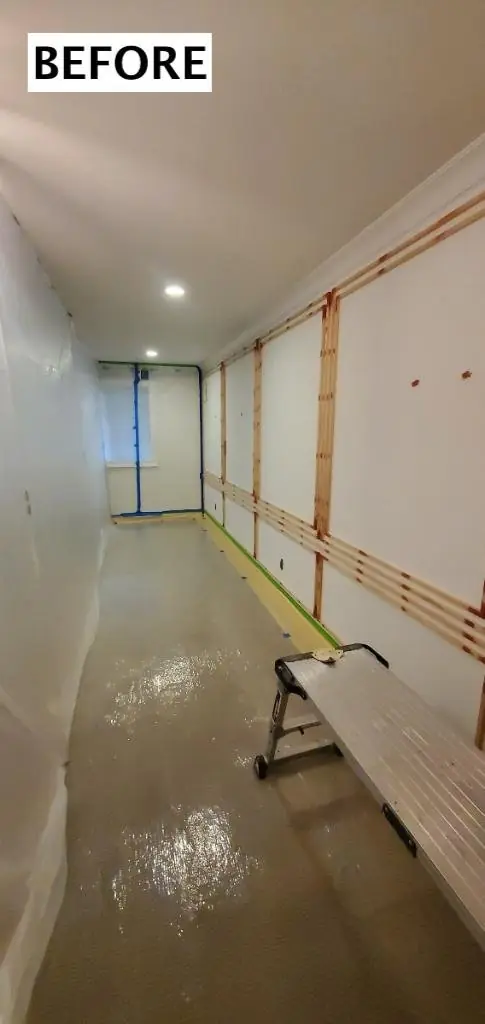
Sanding is where the quality shows. Each patch is worked down until a hand run across it finds no edge, and the surrounding wall is scuffed so the new paint has something to grip. The wall in the before photo here, with its wood strip frames and taped edges, is the kind of surface that rewards that patience.
Spot-priming and keeping the dust contained
Fresh compound and bare filler soak up paint differently than the wall around them, and without primer they show up as dull patches, a problem painters call flashing. Every repair gets a spot coat of primer so the finish coat dries with one even sheen.
The dust control matters as much as the repair. Floors are covered, doorways and furniture are sheeted, and the sanding happens under plastic, the same careful setup shown in Detailed Project Prep. Rob works across the Twin Cities, and a free quote at (612) 445-4023 covers how much patching your walls will need before you commit to a color.