Why popcorn ceilings come down
A popcorn ceiling is a spray-on texture that was cheap and fast to put up, and it has been collecting dust, cobwebs and cigarette-era yellow ever since. Every bump throws a tiny shadow, so the ceiling always looks dingier than the walls under it, and a fresh coat of paint on top just fills the texture with more paint.
Replacing it with knock-down texture gives you a ceiling that is flatter, easier to wipe, and kinder to the light. Rob Fast and the Hues Painting team do this retexturing work for homeowners across the Twin Cities, usually when a room is getting repainted anyway.
One safety note before any scraping starts. Popcorn ceilings sprayed before the 1980s can contain asbestos, so a house from that era should be tested by a qualified lab before anyone wets or scrapes the ceiling. That is general building-safety advice, and it is worth settling before you book anything.
How a ceiling gets stripped and retextured
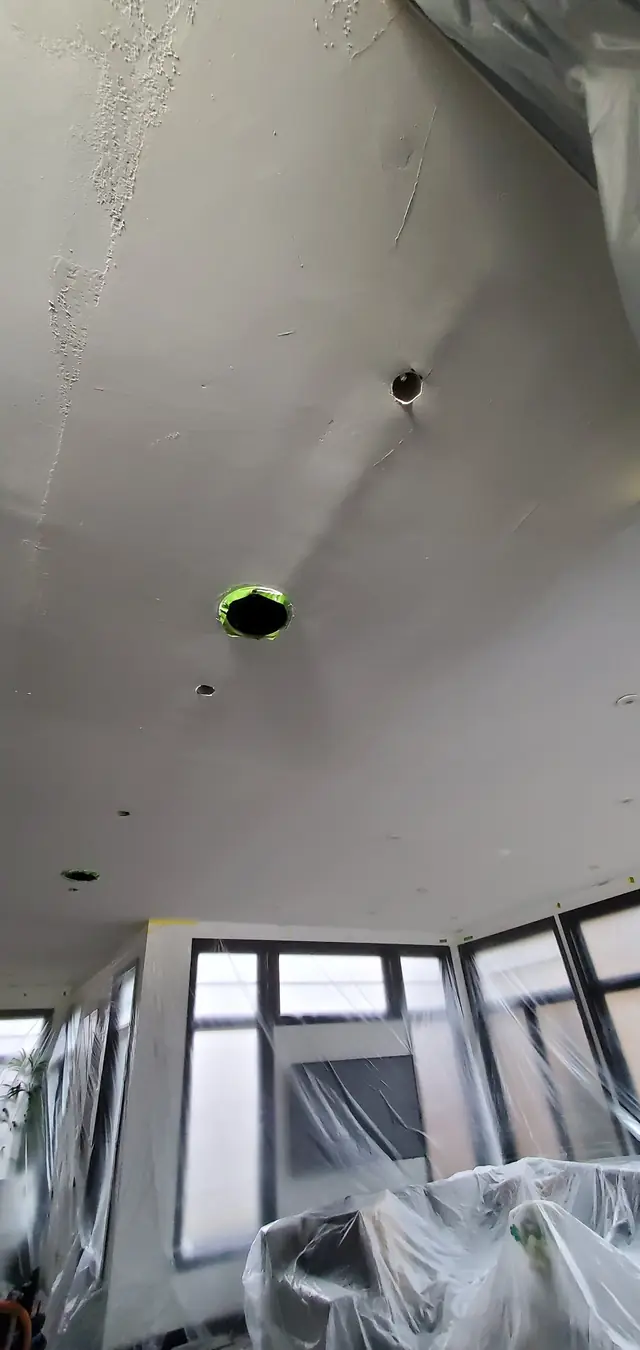
It starts with sealing the room. Floors get covered, walls get sheeted, and the edges get taped so the mess stays in one place. You can see it in the Ceiling Retexture job pictured here, with plastic hung and green tape holding the edges tight.
The popcorn is misted with water so it softens, then scraped off in wide passes. Wet scraping keeps the dust down, and it lets the texture come off in clumps instead of a cloud. Once the ceiling is bare, every old hole, seam and screw dimple gets patched with joint compound and sanded smooth.
The new surface goes on next. Joint compound is thinned and applied across the ceiling, left to set up for a few minutes, and then flattened with a knock-down blade so the peaks settle into soft, low plates. That is knock-down texture: a pattern you can see but barely feel.
Primer, paint and a clean handoff
New texture is thirsty. A coat of drywall primer goes on first, so the finish coat of ceiling paint dries evenly and the patches do not show through as dull spots. Then the ceiling is painted, cut in clean along the walls, and the plastic comes down once everything has cured.
Rob keeps his clients informed from the first walk-through to the last piece of tape, and he will tell you straight if a ceiling needs more patching than it looked like it would. Call Rob at (612) 445-4023 for a free look and an honest answer on timing.