Painting a Fieldstone or Brick Fireplace: What Changes and What to Leave Alone
A painted fireplace looks completely different, and the work is mostly prep and patient brushing.
October 27, 2026 · 4 min read
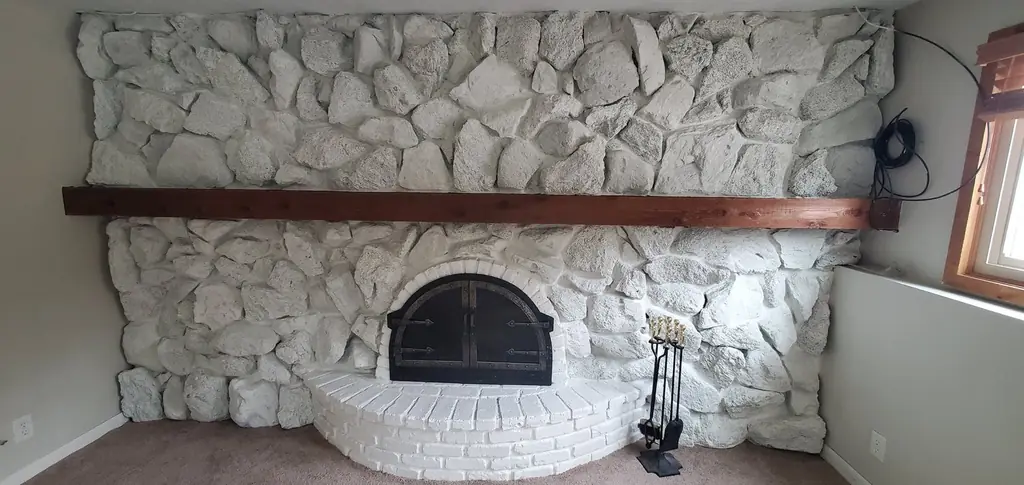
Plenty of Twin Cities homes have a fireplace wall that was the look in 1985 and now dominates the room: dark grey fieldstone, orange-red brick, a heavy hearth. You can live with it, tear it out, or paint it. Painting costs a fraction of demolition and changes the whole feel of the room. It also can't be undone in any practical way, so it's worth knowing what the work involves before you commit.
What changes when masonry gets painted
Stone and brick are porous and uneven. Paint doesn't sit on them the way it does on drywall; it soaks into the surface and fills the texture. That's why a painted stone wall still reads as stone. The shape, the shadows, and the depth of the joints all remain, just in a new color. What goes away is the dark, busy contrast of mixed gray, black, and rust that made the old wall so heavy.
Hues Painting's Stone Fire Place job is a good example. It started as grey and black fieldstone with a red brick hearth. It finished with the stone and the brick both painted white, and the wood mantel left bare. The room is brighter, but the fireplace is still obviously a stone fireplace, with texture you can see from across the room.
Cleaning comes first
A fireplace wall is dirtier than it looks. Decades of soot, smoke film, and dust sit in the pores of the stone, and paint will not stick to that. The surface gets scrubbed and brushed, then rinsed or wiped, and left to dry fully. Loose, crumbling mortar gets cleaned out or repaired, because paint over a flaking surface just flakes with it.
Soot and smoke stains also like to bleed through light paint. A stain-blocking primer handles that. Skip it and you can end up with a yellow or brown cast creeping through a white finish a few weeks later.
Brushwork into the mortar joints
This is where the time goes. A roller covers the face of flat stones fine, but it can't reach into deep mortar joints or the hollows between uneven stones. Those get worked with a stiff brush, pushing the paint in until the old color is gone from every crevice. Miss a spot and a dark line shows up around each stone, like a grid drawn in pencil.
On rough fieldstone, expect a lot of dabbing and stippling, working paint into pockets from several angles. Brick is easier, but the mortar lines still need a brush. Plan on at least two coats of finish over the primer. The first coat of primer always looks blotchy and a little alarming, and that's normal. It's the second and third passes that make it look finished.
Leaving the mantel natural
Painting everything white isn't the only option, and it often isn't the best one. On the Stone Fire Place job, the wood mantel was left bare, and it works because the warm wood sits against the white stone like a frame. If your mantel is a nice piece of real wood, painting it is a loss you can't reverse. Taping and masking it cleanly, so the new paint stops exactly where the wood begins, takes patience, but the contrast is worth it.
If your mantel is in rough shape, that's a different conversation. A worn mantel can be sanded and refinished, or painted to match the stone. The point is to make the call deliberately instead of by default.
Keep paint out of the firebox
Ordinary interior paint doesn't belong anywhere near flames. The surround and the face of the stone are fair game. The inside of the firebox, where it actually gets hot, is not. Heat-rated products exist for specific uses, and the safe answer for the firebox itself is usually to leave it alone or clean it. Ask your painter where the paint stops and how they decide.
Protecting the room
Brushing into stone throws splatter and drips, and scrubbing throws dust. The floor and hearth area get covered, nearby furniture gets wrapped or moved, and the edges where stone meets drywall get taped so the wall paint and the stone paint each stay in their lane. Good prep is what makes the finished line between the two look sharp.
Is painting stone right for you?
Painted masonry is close to permanent. You can paint it a different color later, but getting back to bare stone is a hard, messy job that rarely goes well. If you love the natural stone and just want it cleaned up, say so, and a good painter will tell you plainly. If the wall has been bothering you for years, paint is a reasonable fix and the results can be striking.
- Is the stone or brick sound, or does it need repair first?
- Will the mantel stay natural, get refinished, or get painted?
- Which coats will go on: stain blocker, primer, then how many finish coats?
- Where does the paint stop around the firebox?
Rob Fast paints fireplaces and other interior work across the Twin Cities and gives free quotes. See the project examples on the projects page, or call Hues Painting at (612) 445-4023.
Hues Painting, (612) 445-4023
Call (612) 445-4023More articles
Popcorn Ceiling Removal and Knock-Down Texture: What the Job Really Involves
What scraping a popcorn ceiling involves, why older ones should be tested first, and what replaces them.
Painting Kitchen Cabinets: Prep Is Most of the Job
The sprayer or brush is the easy part. Cleaning, sanding and priming decide whether the finish holds.