Popcorn Ceiling Removal and Knock-Down Texture: What the Job Really Involves
What scraping a popcorn ceiling involves, why older ones should be tested first, and what replaces them.
October 27, 2026 · 4 min read
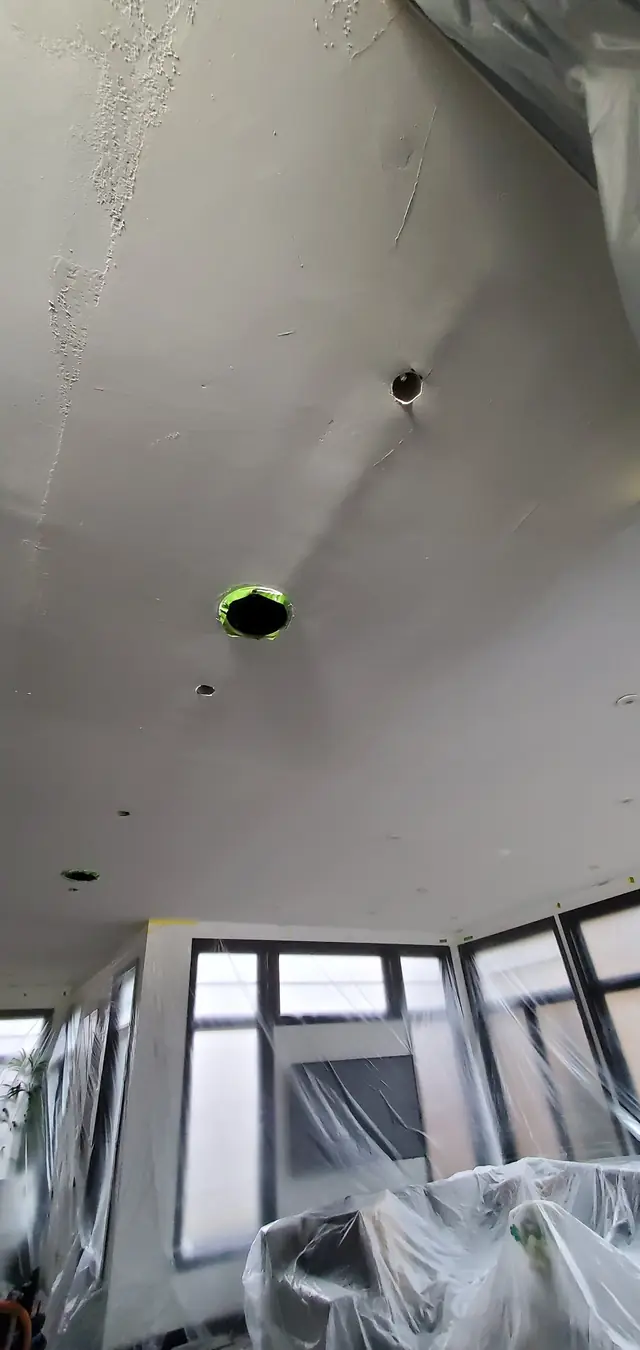
Popcorn ceilings went into a lot of Minnesota houses from the 1950s into the 1980s. They hid rough drywall work, they took the edge off echo, and they were quick and cheap to spray. Most people who call a painter about one today want the same thing: gone, and replaced with something that doesn't collect dust, throw shadows, or catch a ladder rag. Here's what removal and a knock-down replacement involve, so you know what you're agreeing to before anyone lays down a drop cloth.
What you're actually removing
The bumpy coating is a sprayed-on mix that sits on top of the drywall. Sometimes it's been painted over, sometimes not, and that matters. Unpainted texture is porous, so it soaks up water and comes off in soft, wet clumps. Painted texture has a skin on it and fights back, which means slower scraping and more cleanup. A careful painter checks a hidden spot first, like the inside of a closet, to see how your ceiling behaves before choosing a method.
Underneath, you'll often find tape seams, nail pops, and old patches that the texture was covering for decades. None of that is a surprise to a professional. It is, though, the reason a walk-through beats a phone guess: until the texture is off, nobody has seen the real ceiling.
Test for asbestos before anyone scrapes
This is the part to slow down on. Spray textures sold before the late 1970s, and in some cases into the early 1980s, sometimes contained asbestos fibers. A house from that era may have a ceiling that does, and you can't tell by looking at it. Scraping or sanding breaks the coating into dust, and asbestos is a hazard when the fibers get airborne and get breathed in.
So the rule is simple. If your home is older, have a small sample tested by an accredited lab before any scraping, sanding, or wet scraping begins. A lab test is a small step compared with the problem it heads off. If the result comes back positive, stop. Removal then falls under special handling rules that a regular painting crew doesn't work under, and the job goes to an abatement specialist, or you leave the texture alone and cover it.
Whoever you hire, ask how they handle testing and what happens on a positive result. Ask it before the quote is signed, not after the first scrape. A straight, unhurried answer is a good sign. A shrug is your cue to keep looking.
The mess, and how it gets contained
Taking down a popcorn ceiling is the dirtiest job in interior painting. The usual method is to mist the texture lightly with a sprayer, let it soften, and scrape it off with a wide blade into a sheet below. Dry scraping works on some ceilings but throws fine dust everywhere. Either way, the room has to be set up before the first scrape:
- Furniture out of the room, or pushed to the middle and fully wrapped.
- Floors covered wall to wall, with the seams taped so wet debris can't find a gap.
- Doorways sealed with plastic and tape, and vents covered so dust doesn't ride the ductwork into the rest of the house.
- Light fixtures and fans removed or bagged, with the power off where it makes sense.
Expect the room to feel torn up while this is going on. Then comes the cleanup: scraped debris bagged, floors vacuumed with a filtered vacuum, and every surface wiped. If anyone tells you a popcorn removal makes no mess, they haven't done one.
Patch, skim and prime
Once the ceiling is bare, you see every gouge from the blade, every seam, every screw head. Those get filled with joint compound, sanded smooth, and dusted off. Bare patched drywall drinks paint unevenly, so the ceiling gets primed before any texture or finish coat goes on. Skip that and the patches ghost through the final coat like water stains.
What knock-down texture is
Knock-down is a thin mix of joint compound that gets sprayed or rolled on in splatters, then flattened with a wide knife while it's still soft. The tops of the splatters get pressed down and the low spots stay, so you end up with a shallow, mottled pattern instead of raised peaks. It hides minor drywall flaws, wipes cleaner than popcorn, and is far easier to repaint down the road.
It's also a skill job. Knife it too early and the compound smears. Wait too long and it won't flatten. That timing is why a ceiling finished by someone who's done many of them looks even from one wall to the other, and one finished by a beginner looks like a road map.
Paint comes last
After the texture dries completely, the ceiling gets painted. Flat ceiling paint is the usual choice because it hides flaws and doesn't throw glare back at you from a window. Wait for the texture to dry all the way through. Painting over damp compound traps moisture, and it shows up later as stains or peeling.
Questions worth asking any painter
- How do you handle asbestos testing, and what happens if the result is positive?
- How will you contain dust, and what gets covered or sealed?
- Does the quote include patching and priming, or just texture and paint?
- Can I see a past ceiling that looks like what I'm asking for?
Hues Painting lists ceiling retexturing, including popcorn removal replaced with knock-down texture, among its interior painting services across the Twin Cities. Rob Fast gives free quotes. Read more on the popcorn ceiling removal page, or call (612) 445-4023.
Hues Painting, (612) 445-4023
Call (612) 445-4023More articles
Painting a Fieldstone or Brick Fireplace: What Changes and What to Leave Alone
A painted fireplace looks completely different, and the work is mostly prep and patient brushing.
Painting Kitchen Cabinets: Prep Is Most of the Job
The sprayer or brush is the easy part. Cleaning, sanding and priming decide whether the finish holds.