The Prep You Never See: Why Good Painting Starts Before the Paint
The best paint job is the one where you can't tell what was done to your house to get there.
October 27, 2026 · 4 min read
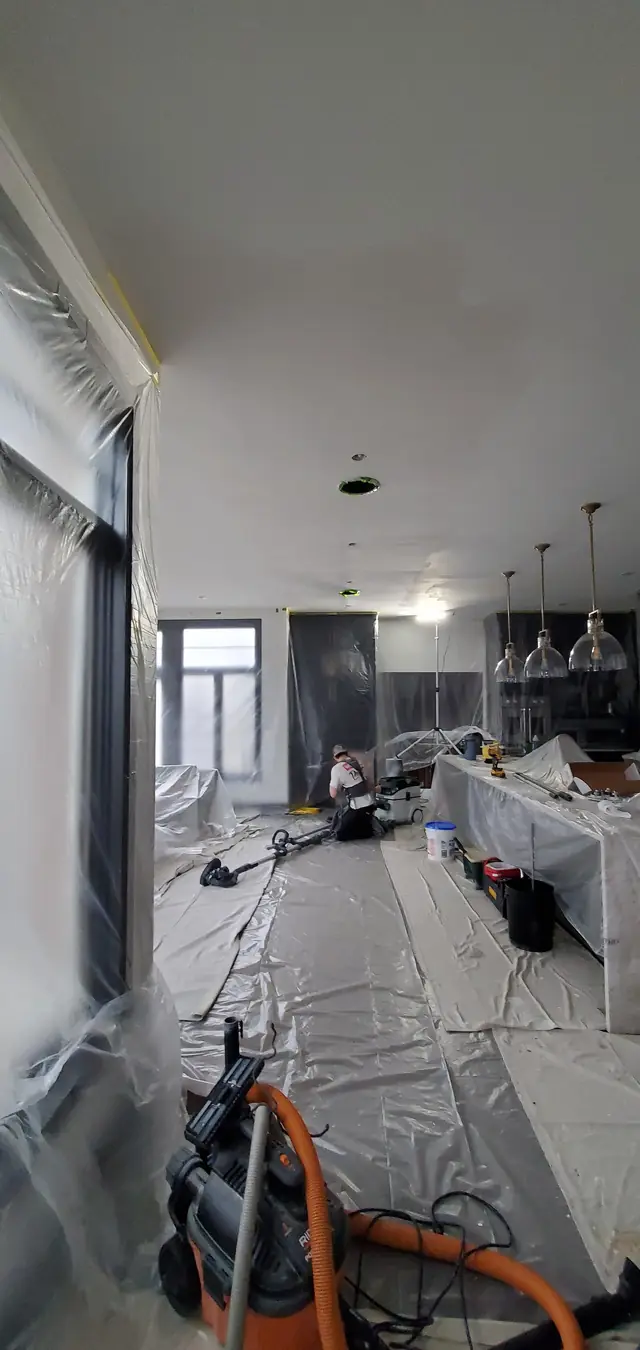
When a paint job is done well, the evidence of prep is gone. You don't see the plastic that covered the doorway, or the dust that never reached your bedroom. You don't see the patches that were sanded until they disappeared. All you see is a smooth wall and a clean room. That invisibility is the whole point, and it's why prep is where the real work happens.
Why prep is where jobs are won
Paint amplifies whatever is underneath it. A dent that's invisible on bare drywall shows up under a coat of satin. A rough patch looks worse once it's painted. Dust left on a surface becomes a bump in the finish. So the quality of the final coat is mostly decided long before the first brush gets wet.
It's also the part that's easiest to cut. Nobody checks whether the sanding was thorough the way they check whether the color is right. A rushed painter can get away with thin prep for a little while. The cost shows up later: nail pops that reappear, tape lines that peel, and patches you can find by running your hand over the wall.
Plastic, tape and sealed doorways
On a job with serious sanding or demolition, the work area gets closed off. Plastic sheeting goes up over doorways and openings, taped at the edges so nothing slips through. Floors get covered, furniture gets wrapped, and vents get blocked so dust doesn't travel through the ducts to the other end of the house.
Hues Painting's Detailed Project Prep project shows what that looks like in practice: a room sealed in plastic, the work carried out inside the sealed space. It isn't pretty, and it looks like overkill from the hallway. It is the difference between a house that needs a long cleanup afterward and one that doesn't.
Dust extraction
Sanding creates fine dust that hangs in the air for hours and settles into everything. Professional crews use sanders hooked to a dust extractor, which pulls the debris into a filtered canister as the work happens, rather than letting it float. Combined with a sealed room, extraction keeps most of the dust where it was made.
This matters for your lungs as well as your furniture. Old paint can contain things you don't want in the air, and drywall dust is a nuisance even when it's harmless. Asking a painter how they control dust is a fair question, and the answer should be specific.
Sanding patches until they vanish
A patch is only done when you can't find it. Joint compound goes on in thin layers, each one sanded smooth before the next, with the edges feathered out so there's no ridge where the patch meets the wall. Then the area gets dusted, primed, and checked under raking light. Shining a flashlight along the wall at a low angle exposes every flaw, which is why professionals use it.
- Nail holes, dings, and cracks filled and sanded flush.
- Seams and old patches checked, and redone if they're proud of the surface.
- Glossy surfaces scuffed so new paint can grab.
- Stains spot-primed so they don't bleed through the finish.
- Everything vacuumed and wiped before a drop of paint goes on.
A mentality, not a checklist
Rob Fast started doing handiwork of all kinds in 2013, learning from one of the best handymen in the Twin Cities. Out of that came a rule he works by, one he describes as a "do it right even if it's painful" mentality. In practice, that means doing the sanding pass nobody will ever thank you for, and re-taping a line that was already close enough.
It also explains the line on the Hues Painting site that says Rob doesn't cut corners. Painters can look similar on paper. What separates them is what they do when no one is checking: whether the third coat of compound gets sanded or skipped, whether the tape gets pulled at the right moment, whether the floor gets covered as carefully on the last visit as on the first.
Honest communication is part of prep
Hues describes its approach as brutally honest, so you're never in the dark about how your project is going. That counts for a lot in a house full of plastic and dust. When something unexpected turns up behind a wall or under old texture, you want to hear about it the same day, not at the end.
How to tell good prep from a good pitch
You can't judge prep from a quote, but you can ask the right questions. Ask what gets covered, what gets sealed, how dust is handled, and how patches are finished. Ask to see a past job where the prep was heavy. A painter who does this work well will enjoy the question, because it's the part they care about.
Also keep an eye on the first hour of the job. If the first thing out of the truck is paint and the last thing is the plastic, something is backwards. The sequence you want is protection, repair, sanding, cleaning, priming, and only then the color.
Hues Painting offers surface touch-ups prior to paint on drywall, wood, and similar surfaces across the Twin Cities, and Rob gives free quotes. Read more on the surface prep page, or call (612) 445-4023.
Hues Painting, (612) 445-4023
Call (612) 445-4023More articles
Popcorn Ceiling Removal and Knock-Down Texture: What the Job Really Involves
What scraping a popcorn ceiling involves, why older ones should be tested first, and what replaces them.
Painting a Fieldstone or Brick Fireplace: What Changes and What to Leave Alone
A painted fireplace looks completely different, and the work is mostly prep and patient brushing.